Find the right corporate record
A Corporate Filing Updates a Registry; It Does Not Verify the Company Behind It
Corporate filings create, update, or give notice of a registered fact, while a registry exposes a bounded and dated public view of that fact. The useful question is what the record asserts and how the registry labels it.
Records covered
A corporate filing supplies a change or notice, and a registry accepts, indexes, and exposes fields from it; their point of contact is the registered transaction.
Establishes / only indicates
Not correct. Useful. There is a difference.
Declines to state
It does not conclude that a registered address, officer, or security notice proves present beneficial ownership, valuation, or operations.
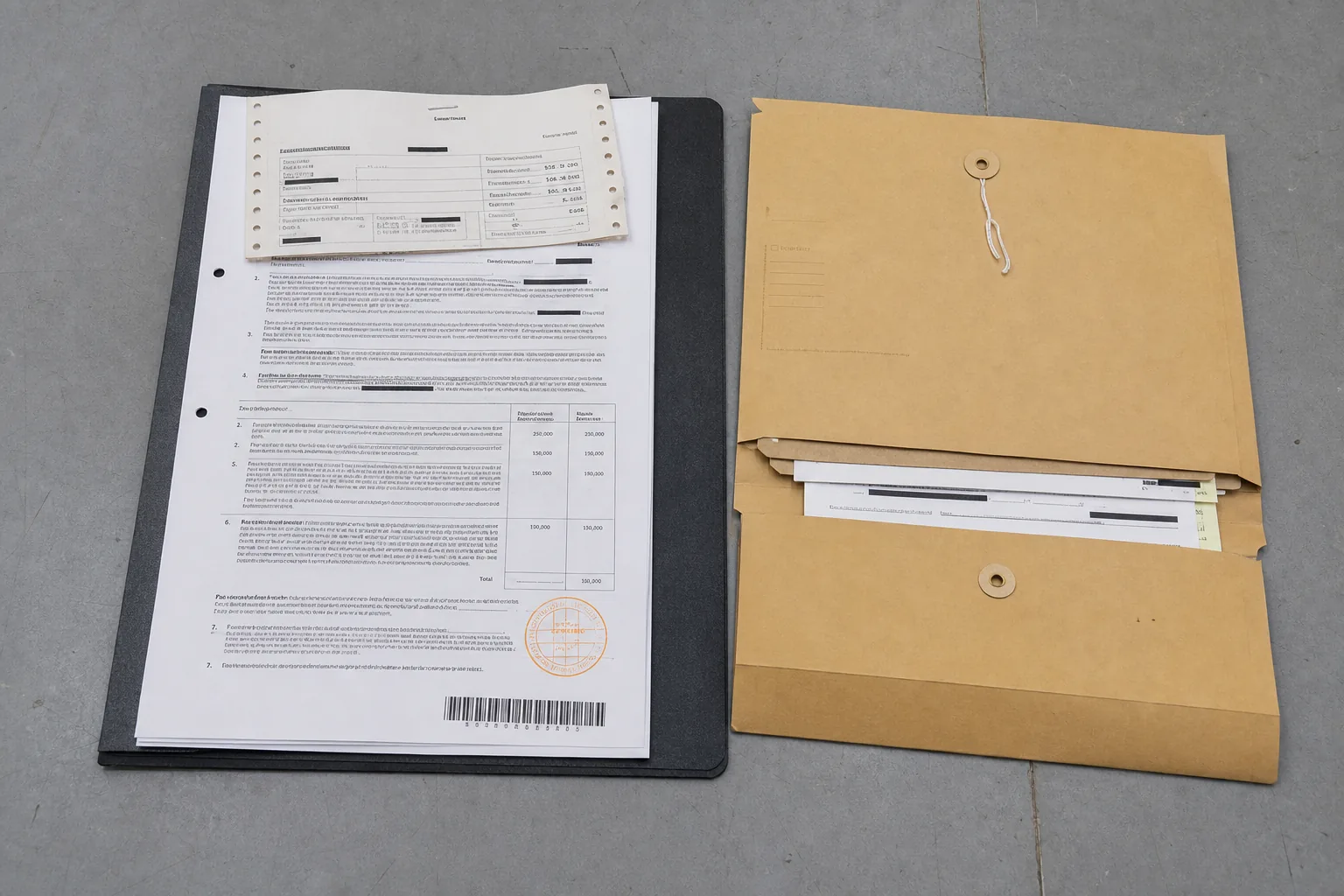
Commercial data platforms.
Entity graphs.
Corporate-family trees rendered in colours associated with a hotel lobby at seven in the morning.
A vendor will show you a map from Pesto Holdings Ltd. to its officer, its old address, a UCC notice, and three alleged subsidiaries in Luxembourg.
The little circles breathe gently.
Somewhere an algorithm has decided that the use of an ampersand is a major life event.
Then there is the company register.
It has a name, a number, a status, an address, some people, a filing history, and the emotional range of a parking meter.
It doesn’t know whether Pesto Holdings makes pesto.
It knows that a document went through a prescribed opening, and that certain fields now belong in its administrative universe.
Your filing and your registry touch at a transaction. That is the whole relationship.
A company delivers an incorporation application, an address change, an appointment notice, a periodic return, a security notice.
The registry accepts, indexes, and displays something from it.
The resulting profile looks like a biography because it has dates and people in it.
A biography is precisely what it is not.
One score, several jobs
Ask first what legal job your document performs.
Corporate filings occupy three effect positions.
Constitutive.
Registry-updating.
Notice-giving.
An incorporation filing can create a registry-recognised entity status. Your officer or address filing updates the public record.
A financing statement gives notice of a claimed security interest.
A periodic return confirms a prescribed package.
That last one is not an affirmation that every fact in the company universe has been personally blessed by a civil servant with a very good stamp.
You can see it in your own registered-office change.
Companies House says the address does not officially change until it registers the change.
That’s a sharp proposition.
Your public registered-office field has changed.
It doesn’t establish a move-in date, landlord consent, a staffed office, or a different operating location.
The street address is doing only the job assigned to it.
Asking it to establish operations is like asking a fire exit sign to account for the building’s revenues.
The same restraint stops a familiar ownership stunt.
Your company records have six field groups.
Legal identity.
Formation.
Form.
Service location.
People.
Filings.
The people group separates officers, members, and people with significant control.
Delaware says annual corporate reports include directors’ names, and are not required to provide shareholder names or all officer names.
So your director list is neither a cap table nor a full management list.
It’s a director list.
Which is already a perfectly respectable career for a list.
Dates carry different paperwork
The deluxe company-data interface likes one date.
It puts it next to a calendar icon and lets the rest of chronology go outside for air.
Your filing record needs four dates wherever you can get them.
Event date.
Execution or signature date.
Delivery date.
Registry acceptance date.
A director can resign, the company can sign and deliver notice later, and the registry can accept it later still.
A charge can be created before it’s registered.
One generic filing_date is a small administrative lie with excellent posture.
The registry adds two more observations.
The date of your search, and retrieved_at, the moment you saw the record.
Its core provenance block has eight attributes.
Registry name, jurisdiction, native identifier, subject label, record status, effective or filing date, source document, retrieval timestamp.
Keep filed_date, registered_date, effective_date and retrieved_at apart wherever they’re supplied.
A screenshot with no provenance isn’t a record.
It’s an alibi with rounded corners.
Timing rules show you why this isn’t decoration.
A UK confirmation statement has a 12-month review period and may be filed up to 14 days after it ends.
An MR01 charge submission must arrive within 21 days beginning after charge creation.
One is recurring confirmation.
The other is a notice window for a particular security event.
“More current” is useless until you name the field.
An annual confirmation can be newer overall while an appointment notice describes a director change more precisely.
Keep the claim with its source
Every registry field has to tell you where it came from.
There are four source modes.
Declarant-submitted.
Registrar-generated.
Document-derived.
Aggregated.
Incorporation particulars and annual returns are declarant-submitted.
A registry-issued number and acceptance timestamp are registrar-generated.
A field you read off a scanned image is document-derived.
A commercial profile combining sources is aggregated.
They have different error patterns and different update lags.
Which is why they shouldn’t share one word, such as “verified,” and call it a day.
Companies House describes its checks for completeness and validity. It may investigate, annotate, remove information, or consider enforcement where it has reason to think information inaccurate.
It also says the volume of documents can make close review of each one impossible.
That gives you a useful, narrow reading.
Acceptance and display evidence the registered transaction, and the displayed status.
They don’t independently establish the factual assertions inside every delivered form.
The registrar is a registrar.
Not a detective in a municipal cardigan.
Your record quality is a field-level question too.
You get six quality dimensions.
Identity resolution.
Completeness.
Timeliness.
Accuracy.
Provenance.
Correction visibility.
A registry-issued identifier can be direct.
An officer address can be filing-derived.
An OCR result can need image review.
A match made by an aggregator can be probabilistic.
Keep your raw display string beside the normalised value.
Sometimes the mismatch was invented by the normaliser, which will naturally deny everything.
Image and profile make different claims
For your historical claim, the current profile and the filed image are not substitutes.
A profile may show 1 current address.
An address history can require several discrete filings.
The profile supports “this is what the registry currently displays.”
The dated image supports “this is what the filer represented on this date.”
Two different propositions.
They’re allowed to disagree after a change, a correction, an amendment, or the gentle passage of time through an administrative database.
Your person fields need the same discipline.
Each officer entry wants six fields from you.
Name.
Reported role.
Event type.
Event date.
Service address.
Residential-address treatment.
Appointment and cessation sit in separate rows.
A current-officers screen is a convenience view.
Not an archaeological survey.
The source for an appointment date is the appointment notice, not a profile quietly omitting the role that ended two summers and one restructuring ago.
Capital has a particular talent for growing a second imaginary meaning while you watch.
A statement of capital can record your number, class, value, rights and subscribers. Companies House illustrates 500 shares at £1 as £500 share capital.
That figure is a filed capital datum.
It isn’t company valuation, market value, group ownership, or a small price target embedded in a form.
The form never asked for those things.
Respect its boundaries.
Notice is not a loan file
Security records make the distinction perform in public, where you can see it.
Michigan Article 9 wants three elements from you for a sufficient financing statement.
Debtor.
Secured party.
An indication of collateral.
It permits filing before a security agreement or attachment.
That’s a mechanism for public notice.
It doesn’t establish that a loan closed, that collateral was owned, that a balance remains owing, or that priority survives every challenge.
A financing statement is not a loan agreement that has watched a documentary about itself.
The UK charge route makes the document stack visible.
An MR01 submission includes the form, a certified copy of the written instrument, and a fee. Companies House keeps the submitted document for the public register.
More material may be public.
Public attachment volume doesn’t turn a charge record into complete economics.
Your core security record has eight fields.
Debtor, secured party, collateral description, creation date, filing date, instrument reference, filing office, lifecycle state.
And a later satisfaction state still has to be reported.
Companies House notes that satisfied charges can remain outstanding on the record unless the company reports satisfaction.
A blank is a condition
Your polished platform’s most dramatic moment is usually a tasteful absence.
It shows you no result.
That absence has several possible jobs.
Registry access gives you four dimensions.
Search eligibility.
Cost.
Delivery format.
Permitted use.
Companies House makes public company data free to view without registration, provides an API, and makes filing-history documents available.
It also warns that searchable information is not comprehensive and that errors or omissions occur.
A free result is neither omniscience nor a certificate of insufficiency.
For your actual null, preserve a null code.
A blank can mean not public, redacted, not filed, not captured, unknown, or not applicable.
California says UCC filings are public records while Social Security numbers are redacted from certain public copies.
For lien searches, model UCC 9-516 identifies one mechanical problem.
A filing can fail when the office cannot index it because a required debtor name is absent.
So your result needs the query name, the jurisdiction, the index condition, the access state and the record status.
Before anybody narrates the silence.
Registry maintenance gives you four events.
Initial entry.
Amendment.
Discharge or termination.
Correction.
Preserve the prior value where publishable, the successor reference, the transaction date, and the reason code where supplied.
A record can be superseded without vanishing.
A model UCC continuation statement has a specific timing condition.
It must be filed within the 6-month period prescribed by 9-515(d) to avoid refusal on that ground.
That’s a rule for that legal model.
Not an instruction to make every older database row disappear in a fit of tidiness.
The check that survives the meeting
Your working method is not an integrated company-truth platform.
It’s a comparison card.
Start with your entity’s literal name and native identifier.
Retrieve the filed change document and the registry extract.
Keep your original display strings.
Then label the effect, the source mode, the status, your dates and the access condition.
The procedure is almost offensively small.
Which is why it survives the point at which a data room starts producing verbs like “harmonize.”
FILED CHANGE
legal name | native identifier | document type | source mode
field as filed | event date | execution date | delivery date
acceptance or registration date | processing status | source locator

REGISTRY VIEW
registry | jurisdiction | native identifier | field as displayed
record status | effective or filing date | search date | retrieved_at
access state | null code | document or transaction reference

DELTA
effect position | filed value -> displayed value | match basis | limitation
Run three passes over it.
Identity asks whether your literal entity, your native identifier, your jurisdiction and your document belong together.
Timing asks which event preceded delivery, acceptance, your search and your retrieval.
Field authority asks whether the value is self-reported, registrar-generated, document-derived or aggregated. And whether it speaks to status, to an update, or to notice.
No pass reaches beneficial ownership, valuation, or operations.
Not because an address field looked earnest on a monitor.
Just the delta
Call it the registry delta.
It is not a verification of the company behind the record.
It’s the measured difference between what a document asserted and what a registry showed you. With dates, access limits and source labels still attached.
Less grand than corporate intelligence.
Also a description of something that actually happened.
The procedure
- A company-record comparison keeps event, execution, delivery, acceptance or registration, search, and retrieval dates separate.
- A filing can create status, update a registry, or give public notice, and those effects are not interchangeable.
- A registry value is labelled as declarant-submitted, registrar-generated, document-derived, or aggregated.
- A registered office and an officer role are not evidence of an operating address or beneficial ownership.
- A security filing records notice and its indexed fields, not a proved debt or a complete loan history.
- A blank search result remains ambiguous until access, redaction, indexing, jurisdiction, and record status are recorded.
Questions
- Does a company filing prove that the company is real?
- A corporate filing can create a registry-recognised status, update a public register, or give notice of a claimed security interest. It does not establish every fact asserted inside the document. A certificate of incorporation can be conclusive evidence that a company is registered under the relevant Act, while a later self-reported address, officer entry, or annual return remains evidence of what was filed and registered.
- Which dates should a company-record search keep?
- A company-record comparison keeps the event date, execution or signature date, delivery date, acceptance or registration date, search date, and retrieval date when the sources provide them. The first four dates distinguish the underlying event from the administrative transaction. The search and retrieval dates preserve what the public interface returned at a particular time, which can differ from a later display or export.
- Does an accepted registry entry mean the registrar checked that every statement was true?
- No. Registry acceptance records that the authority processed or registered the delivered document. Companies House states that it checks filings for completeness and validity, can make inquiries where it doubts accuracy, and can annotate, remove, or enforce after investigation. Those checks support a claim about the filing process and displayed status; they do not make every declarant-submitted fact an independent investigative finding.
- Is a registered office the same as the place where a company operates?
- No. A registered office is a service-location field with a legal function, not necessarily an operating address. Companies House says a registered-office address does not officially change until the change is registered. That establishes the registry effect of the address change. It does not establish where employees work, whether a landlord consented, or whether another address is used for operations.
- Can a director list be used as an ownership list?
- No. A director is a reported role, not an ownership, employment, or signing-authority field unless another source states that relationship. Delaware says annual corporate reports include directors' names but are not required to provide shareholder names and all officer names. A company record therefore keeps officers, members, and people with significant control in distinct fields rather than treating every named person as an owner.
- What does a security filing actually establish?
- A security filing establishes that a notice was filed or registered within the applicable system and identifies the fields that record the notice. An ordinary financing statement uses debtor name, secured-party name, and collateral indication as its three sufficiency elements. That notice does not by itself establish that a loan closed, that collateral was owned, what amount remains owing, or how a court would resolve priority.
- Why does a charge record still appear after it has been paid?
- A charge record can remain outstanding in the public record when satisfaction has not been reported to the registry. Companies House notes that satisfied charges can remain outstanding on the record unless the company reports satisfaction. The displayed result therefore needs a lifecycle label such as new, amended, released, satisfied, lapsed, or otherwise reported; an outstanding display is not automatically a current statement of debt.
- What does a blank company-registry field mean?
- A blank field can mean that a value is not public, redacted, not filed, not captured, unknown, or not applicable. These are different null states. California states that UCC filings are public records while Social Security numbers are redacted from certain public copies. A blank result therefore becomes interpretable only after the record's access, redaction, indexing, jurisdiction, and status conditions are preserved.
- Is a free registry search enough for a company claim?
- A free search can be sufficient to state what a public registry displayed on a recorded retrieval date, but it does not necessarily establish every proposition about the company. Registry access has four dimensions: search eligibility, cost, delivery format, and permitted use. Companies House provides free public viewing, an API, and filing-history documents, while warning that searchable information is not comprehensive and can contain errors or omissions.
- Why is the filed document better than a company-data profile for an old change?
- A current company profile is a convenient statement of the registry's present display, while a dated filing image records what the filer represented on a specified date. A profile may show one current address even though the address history requires several discrete filings. The two sources support different propositions and should retain the historical name, document code, filing date, and retrieval date beside the field.
- What is the smallest reproducible check for a registry change?
- The smallest reproducible check compares the filed change document with the registry extract and labels the event, delivery, acceptance or registration, search, and retrieval dates separately. It also records the legal entity name and native identifier, the field as filed, the field as displayed, registry status, and access condition. The source type is labelled declarant-submitted, registrar-generated, document-derived, or aggregated. The comparison establishes a registry delta, not an independent verification of the underlying business fact.