Know which rules apply
Treaty Status Is Not the Same as State Responsibility
A treaty table answers who has taken a status action under an instrument; responsibility analysis asks about attribution, breach, cessation, reparation and available processes. One is a ledger, and the other is a legal argument with several gates.
Records covered
Treaty participation records and international-law responsibility touch when a state's status action identifies a possible obligation, but the responsibility analysis also requires attribution, breach, and a forum-specific process.
Establishes / only indicates
The record distinguishes a state's treaty position from the additional elements required to allege responsibility; it only indicates that an obligation may be engaged.
Declines to state
It declines to determine state responsibility, jurisdiction, immunity, or an appropriate remedy.
Situation rooms.
Satellite imagery.
Expert reports with enough appendices to qualify as municipal housing.
An international-law dashboard will put every country on a map, colour it red or green, and wait quietly for the word “ratified” to become a verdict.
Then there is the treaty table.
It has a participant name, an action, a date, a footnote, and the emotional range of a rail timetable.
It knows an instrument was signed, ratified, accepted, approved, acceded to, succeeded to, or notified.
It doesn’t know who ordered the port closure. Whether the coast-guard vessel was exercising governmental authority.
What obligation applied that Tuesday. Or which tribunal can hear the argument.
It will not be hurried into pretending otherwise.
Treaty status and responsibility touch at one narrow point.
A state’s participation can identify an obligation that may be engaged.
The later proposition, that particular conduct is attributable to that state and breaches that obligation, needs a different file.
Treating the green square as the whole analysis is like treating a boarding pass as evidence the passenger set fire to the airport lounge.
There’s a connection.
It isn’t the one being claimed.
Several dates, one fact
Start with the instrument.
You need six identity fields.
Full title.
Short title.
Place of conclusion.
Date of conclusion.
Authentic language set.
Text source.
Adoption, conclusion and entry into force can be three different dates.
A treaty can be adopted one day, opened for signature on another, and become operative years later.
A publication date helps you find a PDF. It hasn’t joined your legal analysis, and it should stop trying.
Next you ask who could participate.
The eligibility axis has three values.
Bilateral.
Restricted multilateral.
Open multilateral.
That question is distinct from actual participants. Both are distinct from consent and effect.
Some instruments admit specified entities or organizations as well as States.
Which is why a two-column field, eligible category and actual participant, does more work than a world map whose legend has already gone missing.
Consent has its own machinery, and it isn’t yours.
Article 11 of the Vienna Convention lists the standard routes.
Signature.
Exchange.
Ratification.
Acceptance.
Approval.
Accession.
Your record keeps four consent fields.
The permitted means.
The act actually used.
When consent was established.
And whether some further global condition still applied.
Domestic approval may be politically indispensable.
It is not automatically the international action that completes consent.
The instrument decides that, with the sort of specificity that sends constitutional lawyers reaching for their better folders.
Entry into force then arrives to spoil your otherwise manageable spreadsheet.
Its threshold has four components.
Event.
Numerical threshold.
Qualifying condition.
Waiting period.
Your formula might say 30 days after deposit.
Or 60 instruments.
Or two thirds of parties.
And the global trigger can differ from the later-party rule.
The line saying a state ratified on a date doesn’t, by itself, say the state was bound on that date.
The treaty isn’t being coy with you.
It supplied a formula.
So your participation ledger needs seven fields.
Participant name.
Action type.
Action date.
Instrument date if separately stated.
Effective date.
Depositary.
Source record.
Use YYYY-MM-DD internally, and keep the displayed source date wherever ambiguity remains.
A parliamentary vote, an executive signature and a deposit can all happen in one calendar month.
“Joined in May” is what’s left after three different events have been through a blender.
Your ledger also needs a source hierarchy.
Use the text for design. A certified copy or treaty series for wording. A depositary notice for an event.
An official status table for your current consolidated view. A domestic source for domestic authorization.
For a UN Secretary-General deposit, collect three source slots.
Authoritative text.
Current status.
Event notification.
The status page and the dated notification give you a two-source audit trail.
Your depositary has administrative functions. Article 77 describes eight of them.
It has not become the tribunal for every question its inbox receives.
The act doesn’t fit the row
Now bring in one alleged state act of your own.
Make it suitably unglamorous.
The Municipality of North Rusk announces that the Basilisk dredger may not dock after sunset.
A coast-guard launch enforces the instruction. A ministry later calls it a routine navigational measure.
Your treaty table can record the state’s accession, perhaps an effective date, perhaps a reservation.
It cannot choose among the ministry memo, the launch log, the port notice, the domestic rule, and the actual conduct.
Those objects have the poor manners to matter separately.
Your responsibility baseline has two elements.
Conduct, whether an action or an omission, must be attributable to the state under international law. And it must breach an international obligation of that state.
Article 2 of the ILC Articles on Responsibility of States for Internationally Wrongful Acts supplies that division.
A domestic law can call that same act impeccable, regrettable, routine, or an administrative misunderstanding involving a laminated map.
Its characterization does not control the international one.
Attribution is a connection rule.
Not a vibes test.
Conduct of a legislative, executive, judicial or other state organ is attributable, even where the organ exceeded authority or contravened instructions.
Other routes concern a private entity exercising delegated governmental authority. Conduct on state instructions, or under state direction or control. Conduct the state acknowledges and adopts.
Separate routes.
“The contractor wore a very official windbreaker” is not one of them.
Breach is a separate comparison, and it’s yours to make.
Identify the specific obligation.
The time the state was bound.
The attributable conduct.
What the obligation requires.
An unpopular measure isn’t enough for you. A domestic statute doesn’t settle it either.
Your status record may carry a reservation or declaration, and those need eight fields of their own.
Author.
Label used.
Operative text.
Linked provision where named.
Date made.
Date notified.
Legal character.
Response history.
A heading saying “declaration” doesn’t decide the issue.
The ILC Guide uses a purpose test, asking whether the statement purports to exclude or modify legal effect.
This is where the red-and-green map has to leave the meeting.
It answered a participation question. Your new file asks whether the record supports attribution and nonconformity.
You also need a decision-maker.
Before the ICJ, Article 36 recognizes three familiar routes to consent.
Special agreement.
Treaty clauses.
Optional declarations.
Alongside referral arrangements.
In a WTO dispute, the ordinary claimant is a member alleging impairment of covered-agreement benefits by another member’s measure.
The WTO recorded 631 requests for consultations from 1995 through 2024.
Neither number tells you what a private claimant can obtain.
Which is why the decision-maker and the remedy arrive before anybody starts calling a document a case.
A continuing breach is not a button
If your attribution and breach are supported, the resulting questions still don’t collapse into “damages.”
Article 29 preserves the duty to perform the obligation.
Article 30 creates two different duties where conditions are met. Cessation of a continuing wrongful act. And appropriate assurances and guarantees of non-repetition.
Persistent harm is not automatically persistent breach.
Your question is whether the conduct remains inconsistent with the obligation. Not whether somebody can still point at an unwelcome consequence with a ruler.
Full reparation gives you three forms.
Restitution.
Compensation.
Satisfaction.
Singly or combined.
Restitution seeks to re-establish the pre-wrongful-act situation, subject to material impossibility and disproportionate burden.
Compensation addresses financially assessable damage not repaired by restitution.
Satisfaction can address injury the other forms leave unrepaired, through acknowledgement, regret, or formal apology.
Article 37 bars satisfaction that’s out of proportion or humiliating. Article 39 requires account of the injured side’s wilful or negligent contribution.
The label “full” has not secretly installed a punitive multiplier under the desk.
Circumstances precluding wrongfulness are another file of yours again.
The articles identify six.
Consent.
Lawful self-defence.
Countermeasures.
Force majeure.
Distress.
Necessity.
Conditions, not decorative tags for a press conference.
Necessity requires the act to be the only way to safeguard an essential interest from grave and imminent peril, and not seriously impair another state’s essential interest or the community’s interest.
Among other stated conditions.
Article 27 keeps the underlying obligation alive when the circumstance ends, and leaves material-loss compensation open.
Countermeasures need similar manners from you.
They’re otherwise nonconforming conduct whose wrongfulness may be precluded only to the extent they’re taken against the responsible state under the articles’ conditions.
Their function is to induce compliance.
Not to provide a more respectable label for retribution, sanctions, or force.
Invocation has two routes for states other than the immediately injured one, where the obligation is owed to a group for a collective interest, or to the international community as a whole.
That doesn’t convert every foreign ministry into a collections agency.
Not a verdict
Your reproducible check uses two records.
Not one courageous spreadsheet.
First, make your treaty record.
Preserve identity, eligibility, consent route, action, dates, reservation material, depositary, provenance.
Each claimed fact gets three provenance fields.
Source URL.
Source type.
Accessed date.
Plus volatility for live status.
A status table may be updated daily, or intra-daily. A participant count deserves a retrieval date, not permanent citizenship in a slide deck.
Then make your alleged-act record.
Give it a statement of conduct. The applicable obligation and its temporal link. The attribution route and evidence.
The breach comparison.
The proposed decision-maker.
The remedy sought.
Add process gates for jurisdiction and immunity, which are two separate gates. And one for any circumstance precluding wrongfulness.
A foreign court can have territorial links and still owe immunity. Absence of immunity doesn’t establish jurisdiction or liability.
Your filing cabinet will appreciate the separation, even if your press release doesn’t.
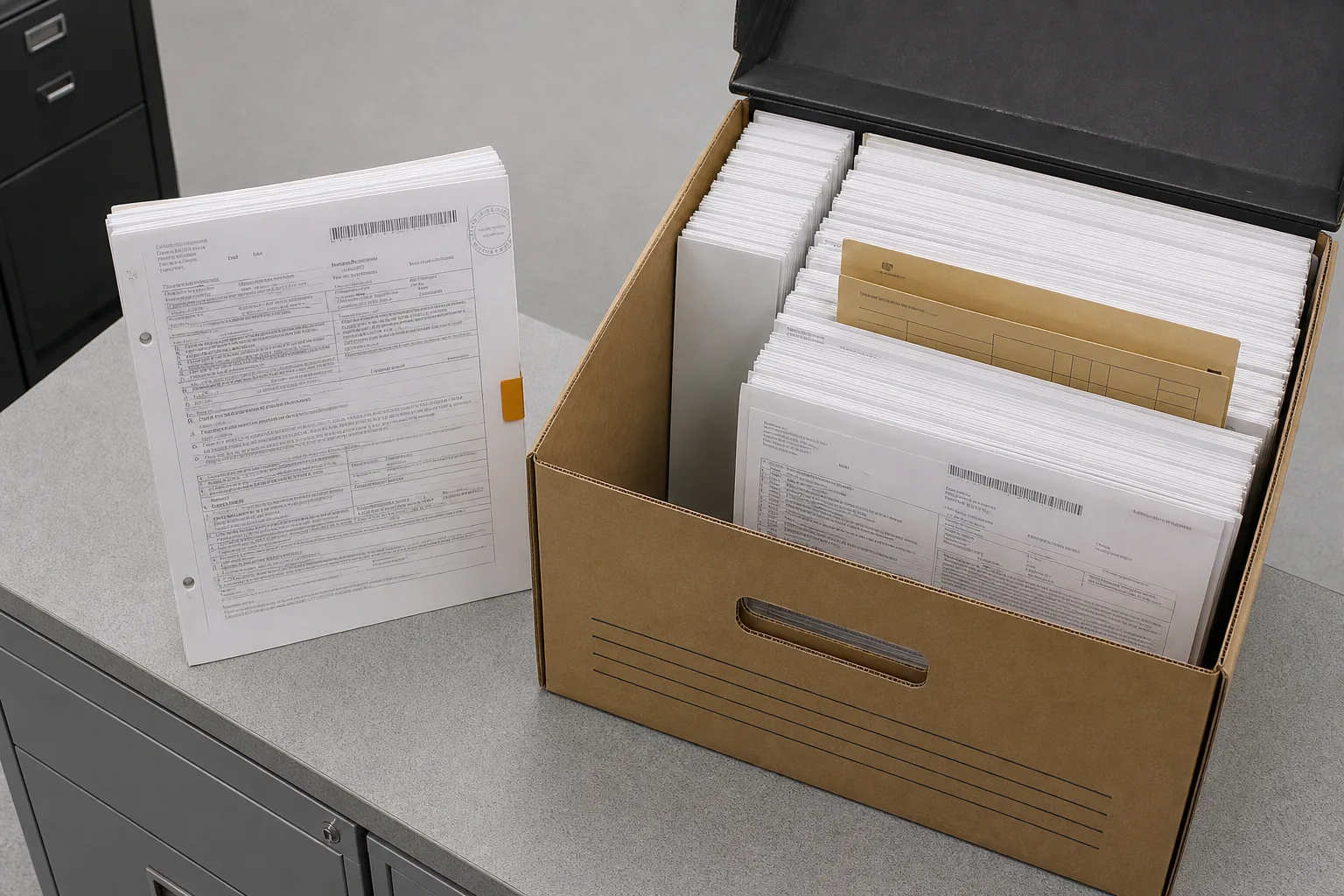
TREATY RECORD                         ALLEGED-ACT RECORD
text | status | event notification    alleged conduct | act date | evidence
eligibility | action | action date    obligation | bound date | treaty text
consent | effective date | reservation attribution route | supporting record
depositary | source | accessed date   breach comparison | decision-maker | remedy
                                      jurisdiction | immunity | conditional response
Run your records in order.
Eligibility asks who may participate. Participation asks who took which action.
Consent asks whether and when the permitted route was completed. Effect asks when the obligation operated for this participant.
Only then does responsibility ask whether the identified conduct is attributable, and whether it breaches that obligation.
Cessation and reparation follow only if your earlier gates have something to stand on.
Countermeasures and necessity stay conditional side passages. Not shortcuts cut through the ornamental shrubbery.
The point
Call it the responsibility gate list.
It doesn’t determine that North Rusk breached a treaty, that the Basilisk had a claim, that a tribunal has jurisdiction, that immunity applies, or that compensation is appropriate.
It makes your missing propositions visible.
And it stops a status entry smuggling them into the room in a trench coat.
The procedure
- Treaty research separates eligibility, participation, consent, and effective date.
- A treaty-status record preserves action, instrument, effective-date, depositary, and source fields rather than one status label.
- Responsibility analysis identifies a decision-maker and remedy before treating an allegation as a case.
- Attribution and breach are separately documented before responsibility consequences are considered.
- Cessation and reparation have different legal functions, and reparation has restitution, compensation, and satisfaction forms.
- Countermeasures and necessity are conditional mechanisms rather than general permissions.
Questions
- Does ratification prove that a state is responsible for what happened?
- No. Ratification or another treaty action records a state's position under an instrument. International responsibility requires at least two further elements: conduct attributable to the state under international law and a breach of an international obligation while the state is bound. A status entry can identify an obligation that may be engaged, but it does not establish the conduct, the legal connection, or nonconformity with that obligation.
- What should a treaty-status record keep besides a country name?
- A treaty participation record keeps seven fields: participant name, action type, action date, instrument date where separately stated, effective date, depositary, and source record. Signature, definitive signature, ratification, acceptance, approval, accession, succession, and notification are different acts. A single label such as “joined” removes the action that gives the date its legal job.
- Is the day a state deposits an instrument always the day the treaty applies to it?
- No. A record separates the consent date from the participant's effective date. It also keeps the treaty's global formula, threshold date, global entry date, and individual later-party rule. A treaty can require a fixed number of deposits, another qualifying condition, and a waiting period. The relevant provision, not the visual proximity of two dates in a table, determines the effect date.
- What evidence connects conduct to a state?
- Attribution evidence identifies the legal route connecting conduct to the state. Conduct of a legislative, executive, judicial, or other state organ is attributable even when the organ exceeds authority or instructions. Other routes can concern delegated governmental authority, conduct on the state's instructions or under its direction or control, or conduct the state acknowledges and adopts. The alleged route needs its own supporting record.
- What has to be shown for an international breach?
- A breach analysis identifies the obligation, the period in which the state is bound, the attributable conduct, and the requirement against which that conduct is measured. Domestic legality does not control the international characterization, and harm alone does not establish responsibility. The comparison asks whether the attributable conduct conformed to the applicable international obligation at the relevant time.
- Why does the forum matter before anyone asks for a remedy?
- A remedy depends on the decision-maker's authority and process. Before the ICJ, a contentious case needs a recognized basis of consent, such as a special agreement, a treaty clause, or reciprocal optional-clause declarations. WTO dispute settlement is ordinarily a member-to-member process. Jurisdiction and immunity are separate gates, so neither an alleged breach nor the absence of immunity establishes what a particular forum can decide.
- Is stopping the conduct the same thing as paying compensation?
- No. Cessation addresses a continuing breach: Article 30 requires the responsible state to stop it if it continues, with appropriate assurances and guarantees of non-repetition where circumstances require. Reparation addresses injury. Full reparation can take restitution, compensation, and satisfaction, singly or in combination. A request to stop conduct and a request to repair loss therefore require different factual and legal records.
- What are the forms of reparation in state responsibility?
- The responsibility articles identify three forms of full reparation: restitution, compensation, and satisfaction. Restitution seeks to restore the pre-wrongful-act situation subject to stated limits. Compensation addresses financially assessable damage not repaired by restitution. Satisfaction can address injury not repaired by the other forms through measures such as acknowledgement, regret, or a formal apology. The applicable forum still determines proof and available relief.
- Can a state simply call an act necessary and avoid responsibility?
- No. Necessity is conditional. It applies only where the act is the only way to safeguard an essential interest from grave and imminent peril and does not seriously impair another state's essential interest or the community's interest, subject to further conditions. When a circumstance precluding wrongfulness ends, the underlying obligation remains and later compliance can still be required.
- Are countermeasures just another name for sanctions or force?
- No. Countermeasures are otherwise nonconforming conduct whose wrongfulness may be precluded only to the extent they are taken against the responsible state in accordance with stated conditions. They are directed to inducing compliance, not retribution. Their assessment includes prerequisites, proportionality, protected obligations, and termination. The label does not supply authority for force or turn every sanction into a lawful countermeasure.
- What is the smallest reproducible way to investigate an alleged treaty breach?
- The check keeps two linked records. The treaty record preserves the authoritative text, current status, event notification, action date, consent route, effective date, depositary, and source. The allegation record preserves the alleged act, obligation, attribution route and evidence, breach comparison, decision-maker, and remedy sought. The records show which questions have evidence and which remain untested; they do not decide responsibility.